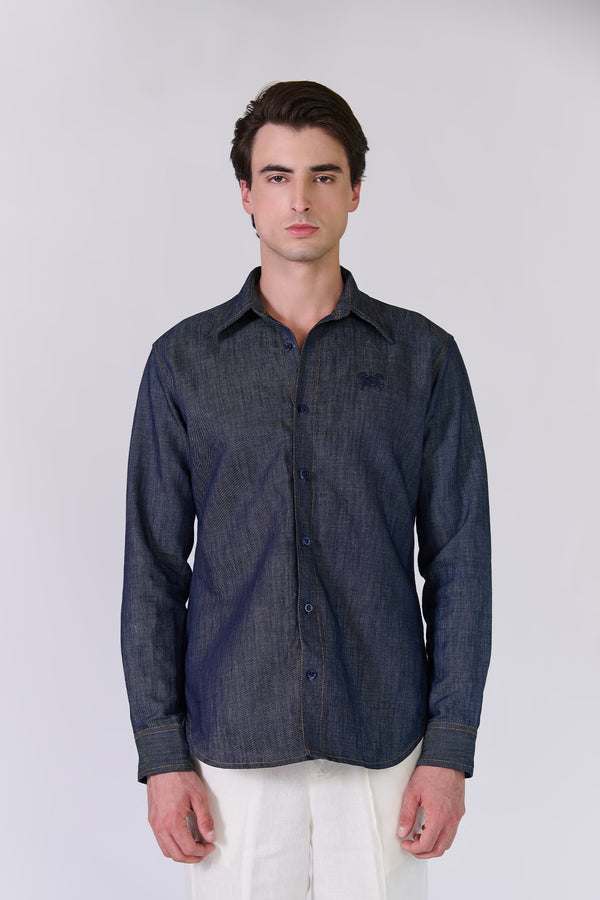










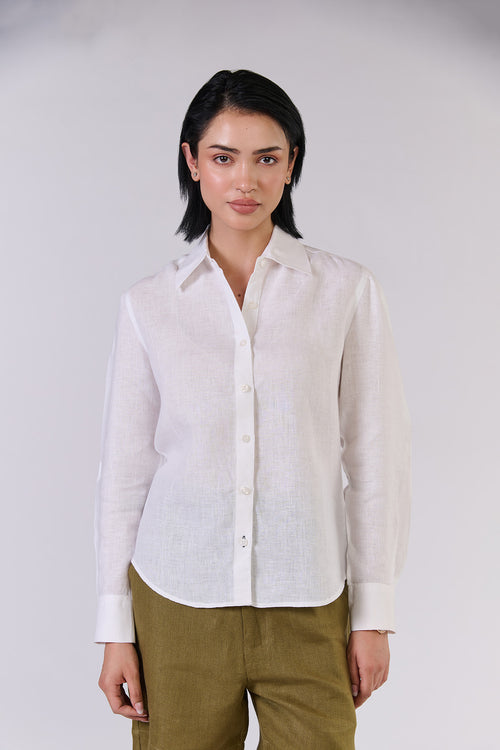
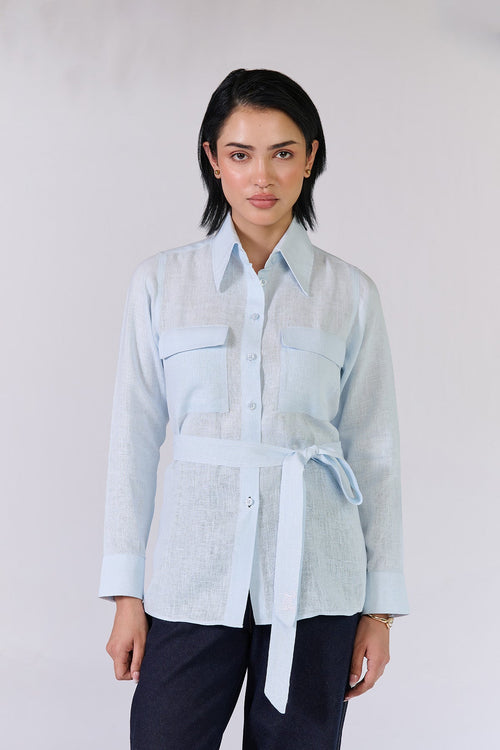
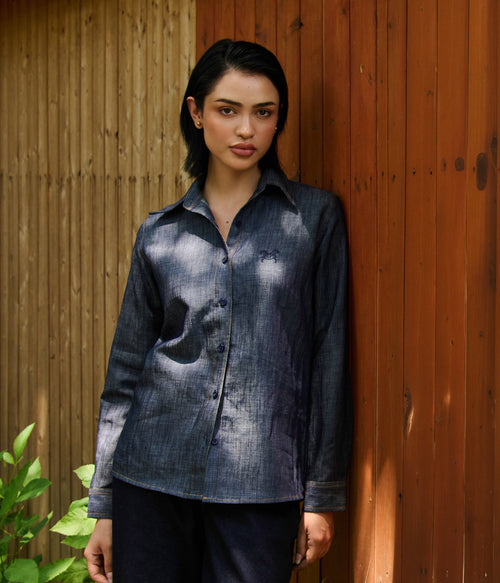








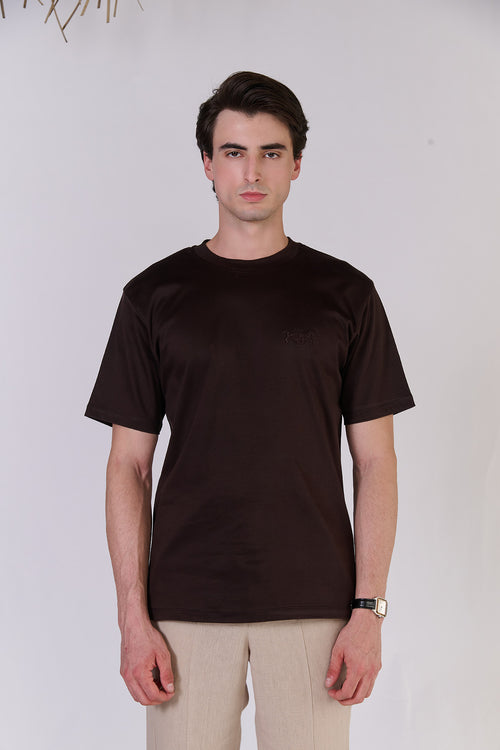

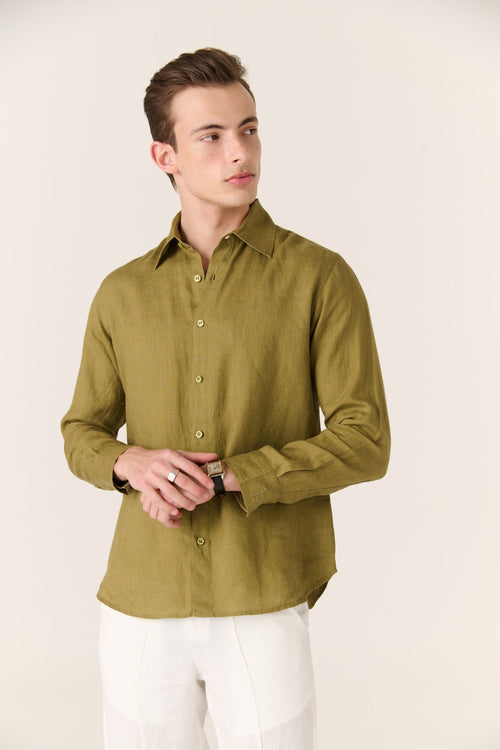
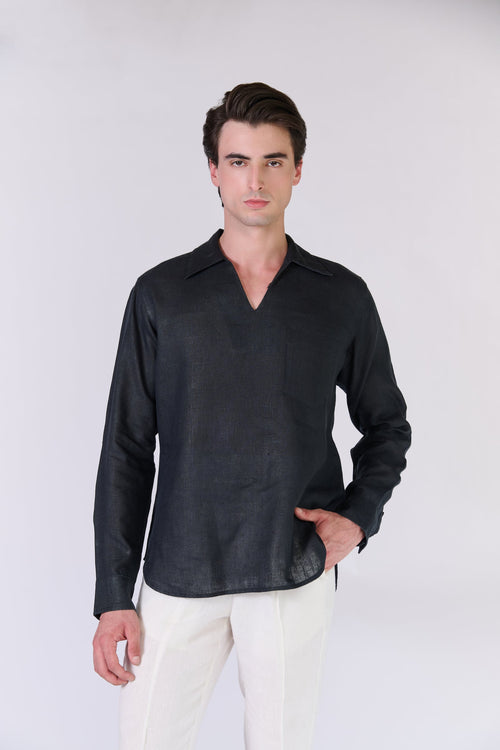






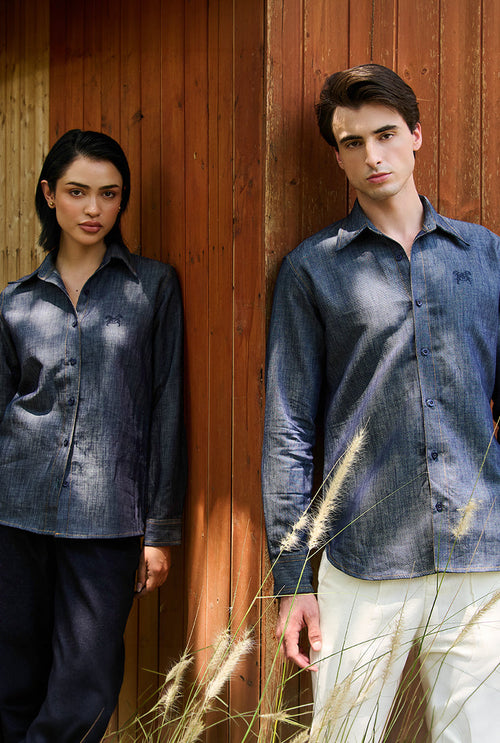

A linen-denim blend is denim re-engineered for warm weather: cotton provides the structure and that classic indigo character, while linen brings airflow, a lighter hand feel and faster drying. Caring for it is simpler than caring for either parent fabric alone — but the two fibres want slightly different things, and a routine that respects both will keep the fabric's colour deep and its texture intact for years. This guide covers washing, drying, ironing and storage, with specifics for Monture's two linen-denim constructions.
Know Your Blend First
Care starts with the composition, because Monture's linen denim comes in two constructions and they behave differently. The Heritage shirts are a 66% cotton and 34% linen blend — noticeably lighter and airier than standard denim, with the linen share high enough to feel the texture. The trousers, dress and shorts carry a 90% cotton and 10% linen blend, which wears closer to traditional denim with added breathability. The higher the linen share, the faster the garment dries and the more it creases; the higher the cotton share, the slower it fades. Read the label before the first wash and set your expectations accordingly.
Wash Cold, Wash Less
The rule for both blends is the same: cold water, gentle cycle, inside out. Cold water protects the indigo finish — the single biggest factor in how your linen denim ages — and keeps both fibres from shrinking. Turn the garment inside out and close any zips before it goes in, and wash it with similarly dark colours, because early washes release a little dye the way any indigo fabric does. The cotton majority means the garment holds moisture longer than pure linen, so give it a full spin; a damp denim left crumpled in the machine sets creases that take effort to press out. Wash shirts after two or three wears and trousers after five or six — denim is designed to go longer between washes than shirting.
Detergent and What to Avoid
A mild liquid detergent in modest quantity is all the fabric needs. Skip chlorine bleach permanently — it strips indigo unevenly and weakens both fibres. Detergent with optical brighteners is another quiet mistake: it works against the deep indigo finish you paid for, gradually greying the surface. For a softened feel, skip fabric softener as well; the linen share already gives the fabric its supple hand, and softener coats the cotton fibres and reduces breathability. If the garment needs freshening between washes, hang it in a breezy spot overnight rather than reaching for another cycle — denim rewards airing more than almost any other fabric.
Drying Without Shrinking
Heat is the enemy of fit. Line-dry linen-denim in shade, turned inside out, with shirts hung from the hanger and trousers clipped at the waist — the linen share dries quickly, and shade protects the indigo from sun-fading. Reshape the garment while damp. If the care label permits a tumble dryer, use the lowest heat only and pull the garment slightly damp to finish air-drying; repeated full-heat drying is what shrinks cotton denim a size over a season. Never wring a linen-blend garment — twist the fabric gently or roll it in a towel instead, and let the linen share do the fast part of the drying.
Quick guide
The five rules of linen-denim care
Temperature
Cold only
Protects indigo and fit
Drying
Shade line-dry
Inside out, reshaped damp
Between washes
Air it
Overnight in airflow
Ironing, Stains and Storage
The linen share creases, so expect texture through the back of a shirt after a long sit — steam releases it quickly. Iron on medium heat while the fabric is slightly damp, inside out to protect the surface finish. Treat stains the day they happen: work diluted mild detergent into the spot with your fingers and rinse cold, rather than scrubbing, which fades indigo right where you rubbed. Store the garment on a hanger rather than folded in a drawer; a folded indigo fabric prints a crease that takes a full steam session to release. With this routine the fabric softens and personalises over the first months without losing its structure.
A Simple Season-Long Rhythm
Rotate two linen-denim pieces rather than wearing one into the ground, air each overnight after wear, and send to the wash only when the fabric genuinely needs it. That rhythm matters more than any single wash: the combination of cold cycles, shade drying and patience is what lets the blend develop the soft, faded-at-the-seams character that makes denim worth keeping. If you are choosing your first piece, start from our guide to the best linen-denim shirts in India, then explore linen denim for men and linen denim for women.
Versatility ranking — how the blend compares for daily wear
FAQ
Does a linen-denim blend shrink in the wash?
A cold, gentle wash with shade line-drying keeps the fit essentially unchanged. Shrinkage comes from heat — hot water or a hot tumble dryer — so if you keep both out of the routine, the garment stays the size you bought.
How often should I wash linen-denim clothing?
Shirts after two or three wears, trousers after five or six, and always by feel rather than a fixed count. Airing the garment overnight between wears extends the interval safely.
Will the indigo fade?
Slowly and evenly, which is part of the fabric's appeal. Cold washes inside out, shade drying and no bleach keep the fading gentle; hot water and direct sun are what age denim prematurely.
Can I iron a linen-denim shirt?
Yes — medium heat, inside out, while the fabric is slightly damp, or use a steamer. The linen share creases more than pure denim, but it also releases creases easily under steam.
Shop the edit


Care for the blend this way and it ages the way good denim should. For more on what each fabric does, read the materials of Monture or whether linen shrinks after washing.