
















Stand at a bus stop in Delhi in the second week of May and you can tell, within about ten minutes, who is wearing polyester. It's the person pulling their shirt away from their back every few seconds. Most of us have been that person at some point.
Our family has worked in textiles for 75 years. Spend that long around fabric and you stop arguing about it in theory; you just know how it behaves on a body at two in the afternoon. So when people ask why there isn't any polyester in a Monture piece, the honest answer is short. In Indian heat, it doesn't do the one job a summer shirt has. The longer answer is below, including the places where polyester genuinely does better, because pretending otherwise wouldn't help you choose.
The short answer
On a 35 to 45°C day, cotton is the more comfortable fibre to have against your skin. Polyester dries faster and creases less, but it doesn't absorb sweat, it holds on to odour, and it feels warmer the longer you sit still in it.
What actually happens when you sweat
Cotton is a plant fibre, made of cellulose, and cellulose likes water. A cotton shirt pulls sweat into the fibre itself, spreads it out, and lets it evaporate from the outside of the cloth. That evaporation is what cools you. Textile labs measure this as moisture regain: cotton sits at around 8%, polyester at well under 1%.
Polyester is made from petroleum, spun into a smooth filament. It barely absorbs anything. Sweat stays on the surface, between the fabric and your skin, and you feel it as that slightly greasy film. On a cool day you'd never notice. At 40°C, with the air already full of moisture, it's the whole experience.
Cotton has a weakness here too, and it's worth being straight about it. Because it holds water, a heavy cotton shirt can get damp and stay damp. That's a weave and weight problem more than a fibre problem, which brings us to the next point.
Breathability is about the cloth, not only the fibre
A dense cotton twill will feel warmer than a light, open polyester mesh. That's true, and it's why gym kit is often synthetic: it's knitted to move sweat outward fast while you're running and air is rushing past. The trouble is that most of an Indian summer isn't spent running. It's spent sitting in a car with weak AC, standing at a wedding, walking from the parking to the office. Sportswear is designed for airflow you don't have when you're standing still.
For everyday clothes, a fine cotton in a light weave gives you the best of both: the fibre absorbs, the weave lets heat escape. That's the combination we build our summer pieces around.
Cotton vs polyester, side by side
| Cotton | Polyester | |
|---|---|---|
| Sweat | Absorbs it and lets it evaporate | Leaves it sitting on the skin |
| Feel at 40°C | Soft, dry-ish, cooler when still | Clingy, sticky after an hour |
| Drying | Slower | Faster |
| Creasing | Creases some | Barely creases |
| Odour | Washes out easily | Builds up over time |
| Ageing | Softens; long-staple keeps its shape | Pills and goes shiny |
| Verdict for Indian summer | Wear it | Keep it for the gym or the raincoat |
The smell problem nobody puts on the label
You've probably noticed that some shirts smell even after a wash. There's a reason. Polyester attracts oily compounds from skin, and research from Ghent University in 2014 found that the bacteria behind body odour did noticeably better on polyester shirts than on cotton ones after exercise. Cotton releases those compounds in the wash; polyester tends to hang on to them. Over a summer of daily wear, that adds up to a shirt you quietly stop reaching for.
Where polyester does win
It would be easy to stop there, but it wouldn't be fair. Polyester dries quickly, so it's useful for a monsoon jacket or a swim cover-up. It hardly creases, which is why it's in so many travel shirts. It holds colour through a lot of washing, it's strong, and it's cheap to make, which is the real reason it's in so much of what's sold in India.
We'd happily put it in a raincoat. We just wouldn't put it next to your skin in June.
Not all cotton is the same
If your experience of cotton is a tee that went thin and bobbly after ten washes, that was short-staple cotton. The length of the fibre decides almost everything. Longer fibres spin into a finer, stronger yarn with fewer loose ends, so the fabric stays smooth, resists pilling and keeps its shape.
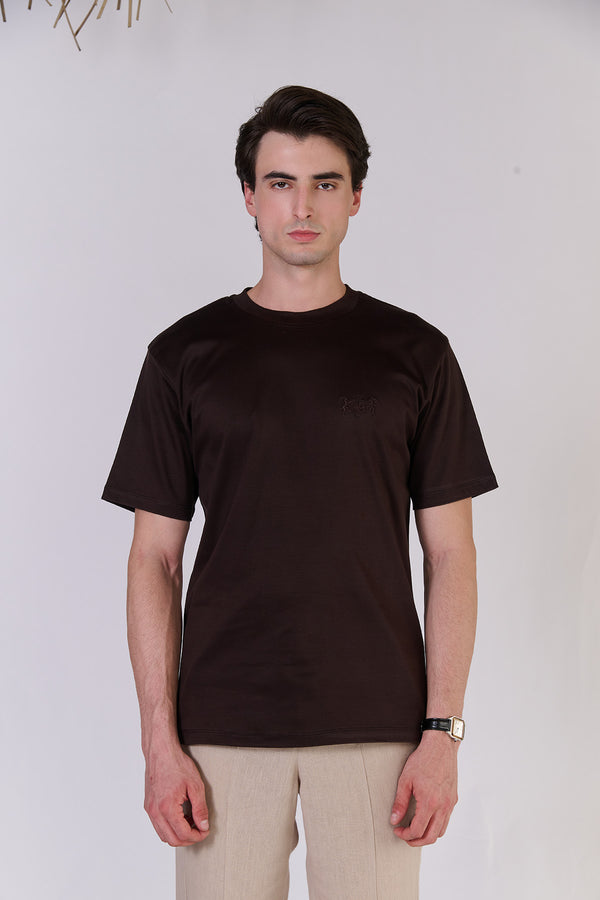
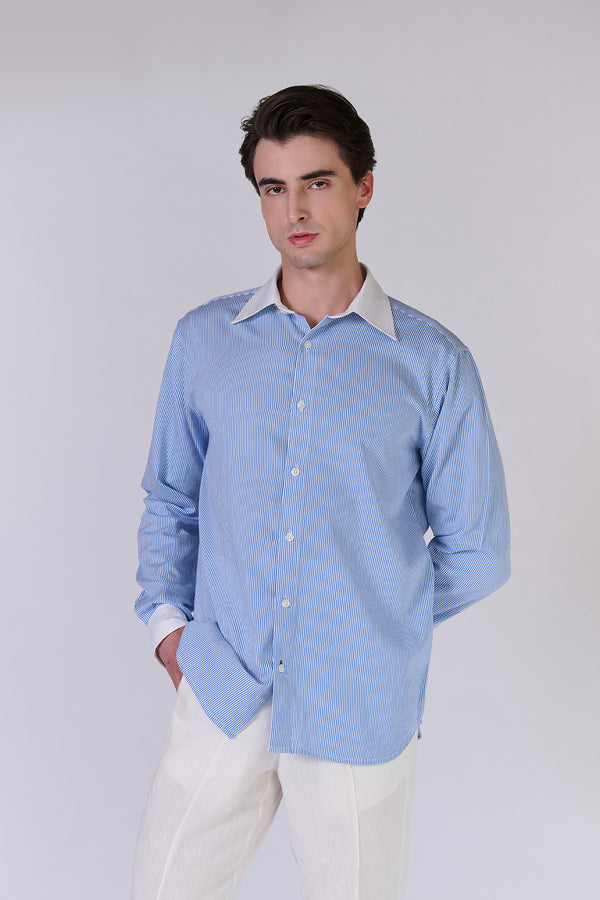
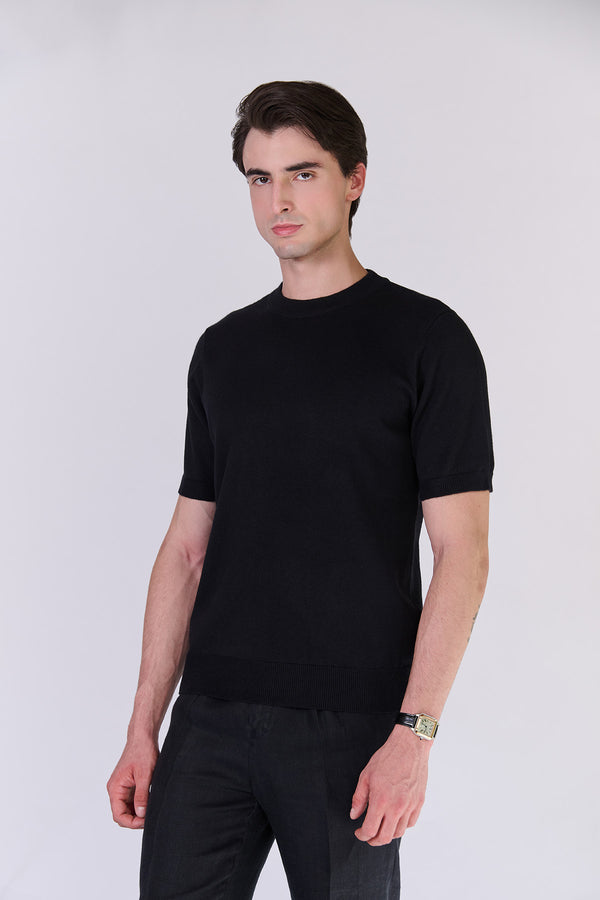
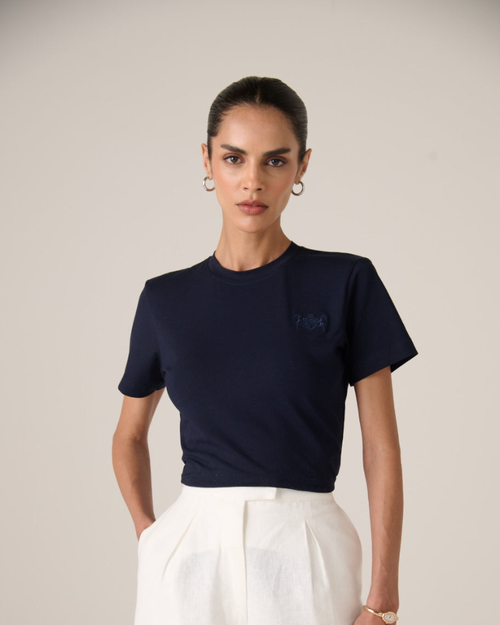
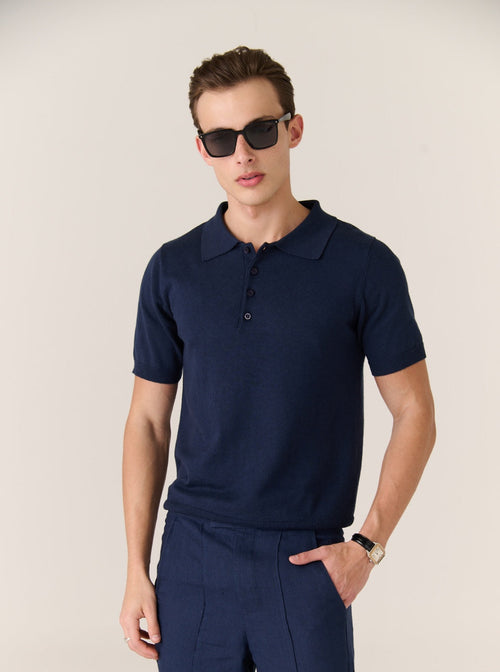
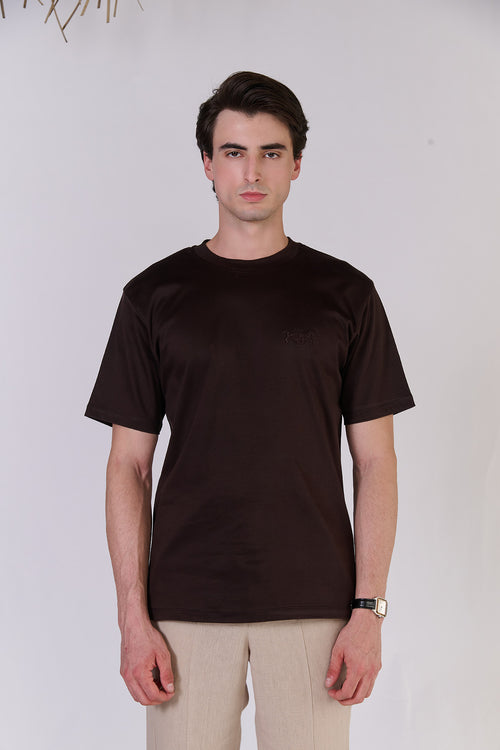
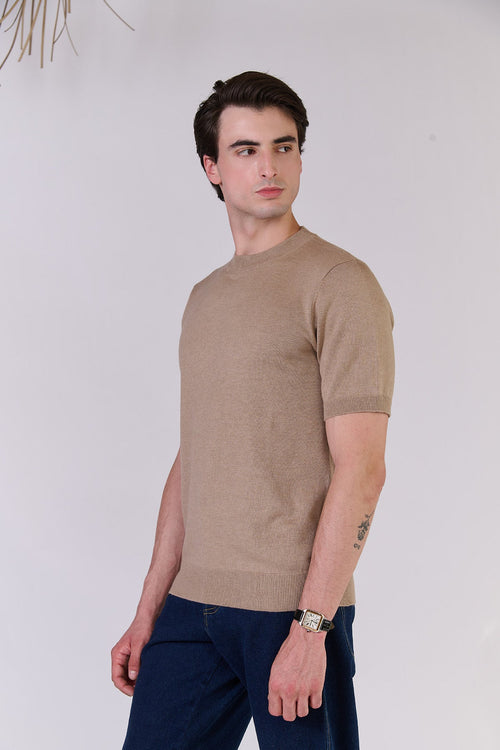
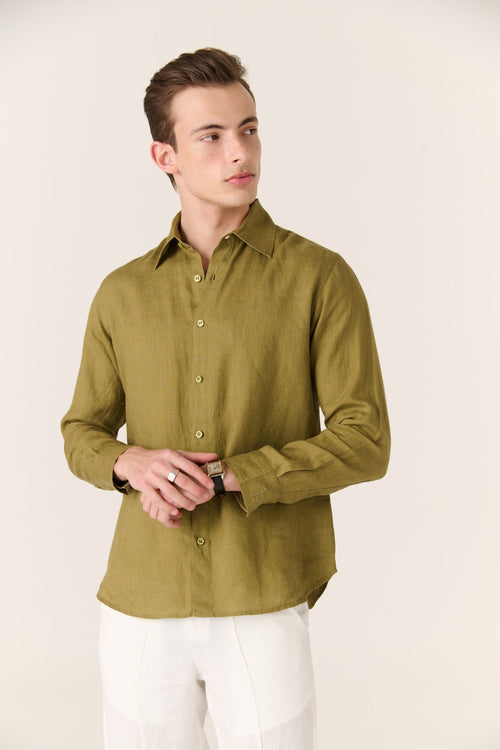
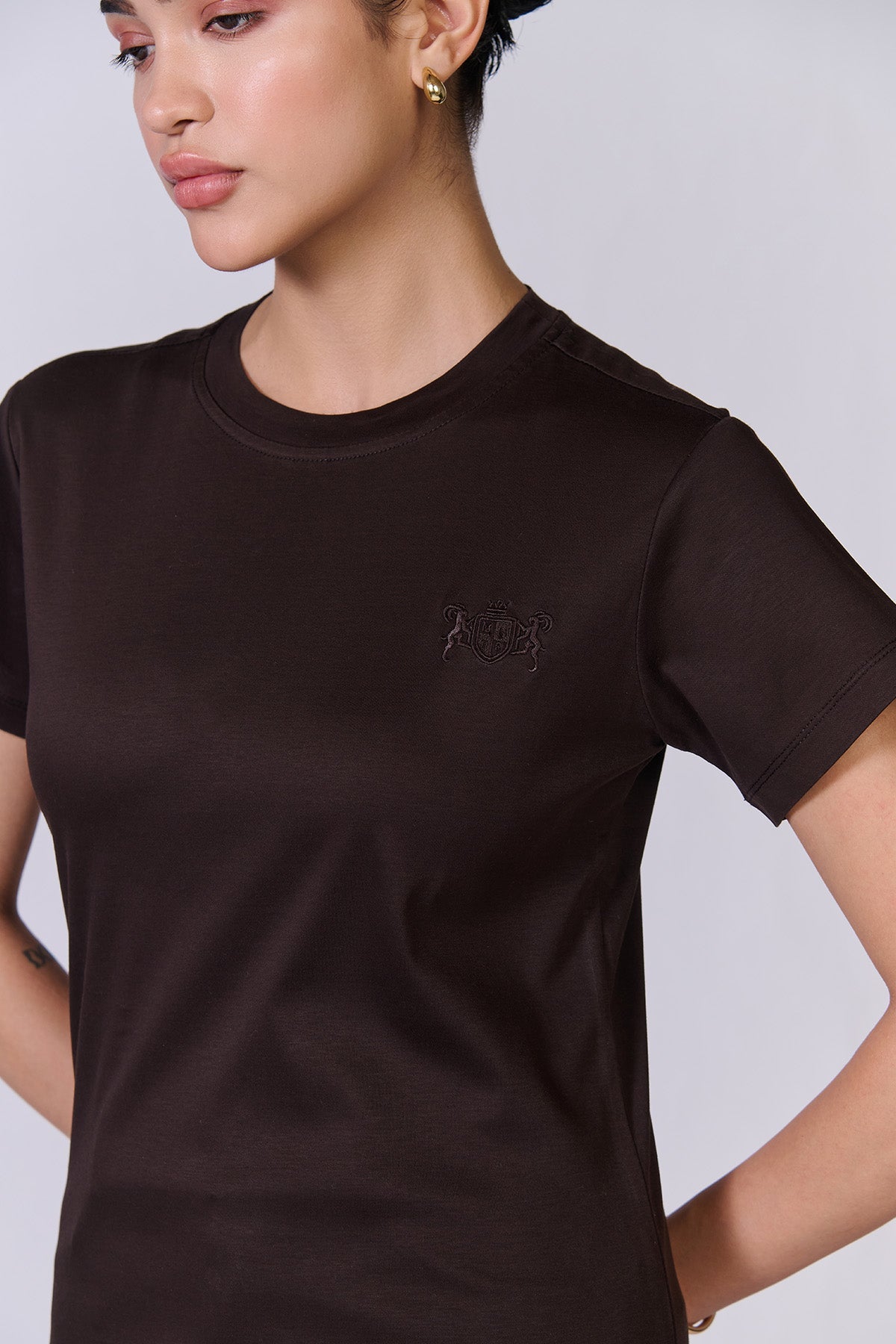
This is where we spend our money. The Riviera Tee is made from Supima cotton imported from the United States and finished for a cooler, silkier touch. The Giza Stripe Shirt uses yarn-dyed Egyptian Giza cotton, which is as fine as cotton gets. And for days when you want something even smoother, our Signature Blend pieces pair cotton with Lyocell (TENCEL™), a fibre regenerated from wood pulp rather than oil, which handles moisture well, plus a little silk. If you're wondering how fine cotton behaves in the wash, we've covered whether Supima cotton shrinks.
Shop the edit


Browse the full Supima cotton and cotton-Tencel-silk ranges.
Three checks before you buy anything for summer
01
Read the composition
Not the product name. "Cotton-feel" and "cotton-rich" often hide polyester.
02
Hold it to the light
You want a light, even weave, not a dense, plasticky sheen.
03
Feel the inside
That's the side touching your skin for twelve hours.
Poly-cotton blends are the tricky ones. They're everywhere because they're cheap and crease less. In our experience, once polyester is a meaningful share of the cloth, you feel it the moment you start to sweat. If you want to understand the fibres we do use, read about the materials of Monture.
FAQ
Is polyester good for summer?
For sport, where you're moving and the fabric is engineered to wick, it can work. For everyday wear in Indian heat, it traps sweat against the skin and feels warmer than cotton, especially when you're sitting or standing still.
Is cotton or polyester better for sweat?
Cotton. It absorbs sweat and lets it evaporate, which cools you. Polyester absorbs very little, so sweat stays on your skin.
Why do polyester shirts smell even after washing?
Polyester attracts oily compounds from skin and holds on to them, and odour-causing bacteria do well on it. Cotton releases those compounds more easily in the wash.
Is polyester more durable than cotton?
The fibre is strong, but polyester shirts tend to pill and go shiny with wear. Long-staple cotton such as Supima or Giza stays smooth and keeps its shape for years with sensible care.
One last thing
Next time a shirt is sticking to you by lunch, check the label before you blame the weather. If you're weighing cotton against other natural fibres, our linen vs cotton guide and the round-up of breathable fabrics for summer are good next reads.