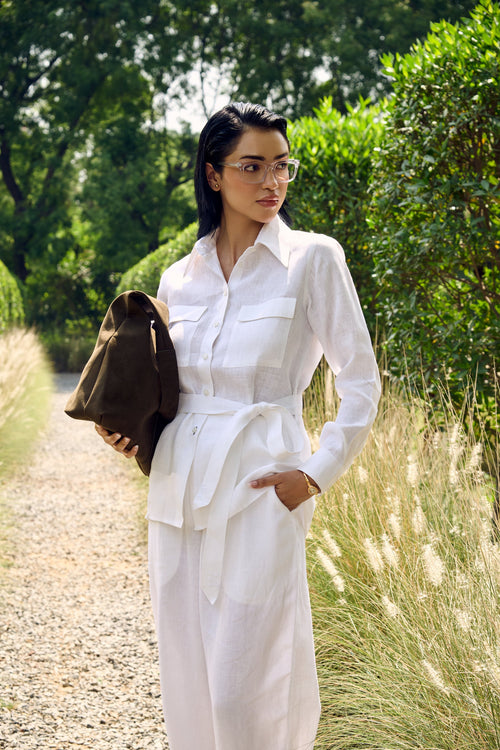

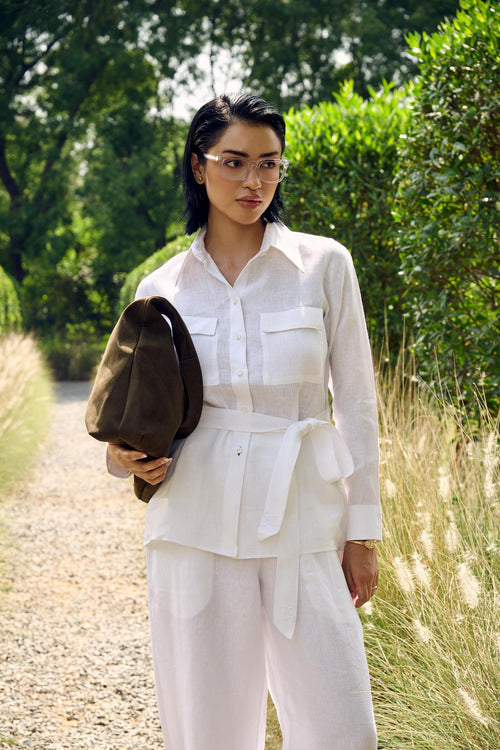















No steamer? A linen shirt presses perfectly well with a household iron, a spray bottle and a slightly damp cloth. The single rule that matters most: iron linen while it is damp, not dry. Work collar to cuffs to hem, and the whole shirt takes under ten minutes.
Linen forgives almost every care mistake except one: pressing bone-dry fabric on high heat, which flattens the weave, glazes the surface and can scorch light colours permanently. Do it right and the shirt takes a clean, soft-pressed finish that suits the fabric's character — not a corporate stiffness linen was never meant to have.
Why Damp Linen Presses Best
Moisture is what relaxes flax fibres, so a damp shirt reshapes under the iron in one pass while a dry one fights back. Steam from a steamer works on the same principle, which is why the no-steamer workaround is simple: recreate that moisture yourself. A spray bottle does it in seconds. If you want to see how the fibre behaves through its whole care cycle, our guide to linen shrinkage after washing covers the washing and drying side.
What You Need Before You Start
Four things, none of them special. A steam iron with a spray function — or a plain iron plus a spray bottle. An ironing board, or a hard flat surface with a terry towel over it. A pressing cloth: any clean cotton pillowcase works. And the shirt itself, still slightly damp from the line — or misted evenly and left for ten minutes if it has already dried. Never press linen soaking wet; the fabric needs to be damp, not dripping, or you spend the whole session steaming off surface water instead of pressing the weave.
Quick guide
The kit, in four items
Iron
With steam or spray
Linen setting
Surface
Board or towel
Firm, not soft
Press cloth
Cotton pillowcase
On dark colours
Shirt
Damp
Never bone-dry
The Five-Minute Method
Set the iron to the linen setting — the hottest on most irons — with steam on. Work in this order and the finished sections never get re-creased:
- Collar first: open it flat, press from the points toward the centre, then roll the edge with your fingers for a natural line.
- Cuffs next: unbutton them, press the inside then the outside, and shape the cuff closed with your hand as it cools.
- Sleeves: lay flat, press in long strokes from the shoulder to the cuff. Pressing a sharp crease down the sleeve is optional — many men skip it for a softer look.
- Body: front panels, then yoke and back. Press around buttons, never over them, or they leave a dent in the fabric.
- Hem last: press the bottom edge flat so the shirt hangs cleanly.
Keep the iron moving in long, firm strokes; holding it still on light linen risks shine. Dark colours and stripes go under the pressing cloth so nothing glazes.
Mistakes That Flatten a Good Shirt
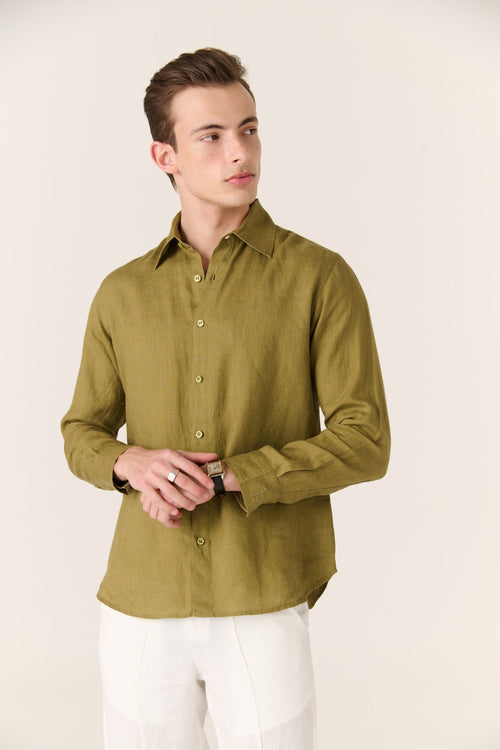
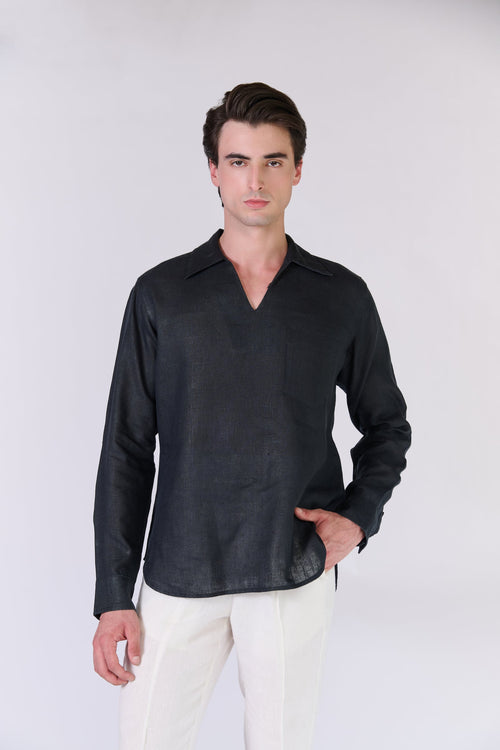
Three errors undo a careful session. First, pressing dry: dry flax resists, so you press harder, and hard pressure on dry fabric is what produces that stiff, shiny finish. Second, skipping the press cloth on dark fabrics — a directly pressed midnight blue or heritage olive linen shows every pass. Third, dressing immediately: hot linen sets its own creases, so give the shirt five minutes on a hanger before you put it on. Use a broad hanger rather than a wire one, and the shoulders keep their shape until the shirt is worn. For the washing side of linen care, see our linen shrinkage guide.
No Iron at All? Two Fallbacks
If the iron is missing entirely, the shower-steam trick works: hang the shirt in the bathroom during a hot shower for ten minutes, smooth the panels with your hands, and let it finish drying on a hanger. It softens wrinkles but will not give the collar and cuffs the sharpness of a press. The even lazier route, and often the right one: hang the freshly washed shirt on a broad hanger, smooth the seams, button the top button, and let the natural creases be part of the look. Linen is a textured fabric; a softly creased linen shirt reads as relaxed, not neglected. Neither fallback replaces a press for an evening out — both are perfectly good for a Tuesday.
Linen Shirts Worth Pressing
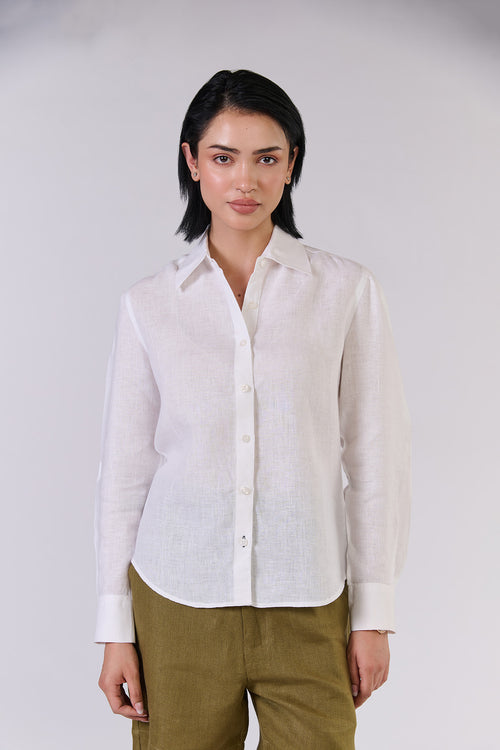
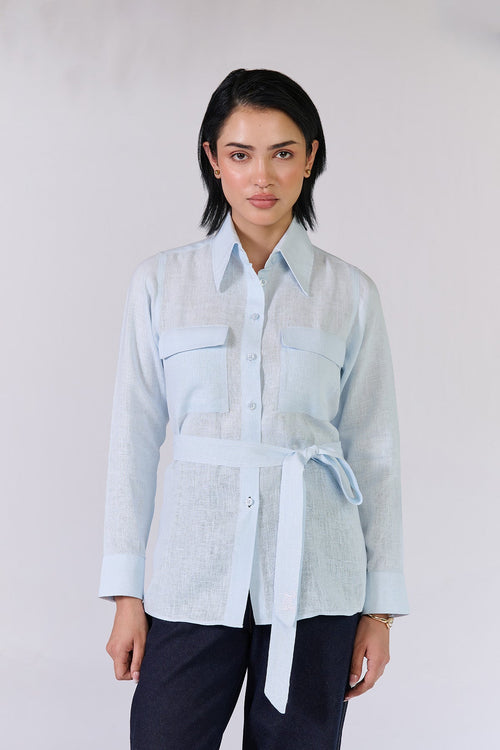
A shirt that holds a press well starts with the fabric. Long Belgian flax pressed damp takes a clean finish and softens again with wear — the reason we build the Riviera range around it. If you are unsure which size to press into shape, the men's linen shirt size guide settles it before you order.

Presses crisp
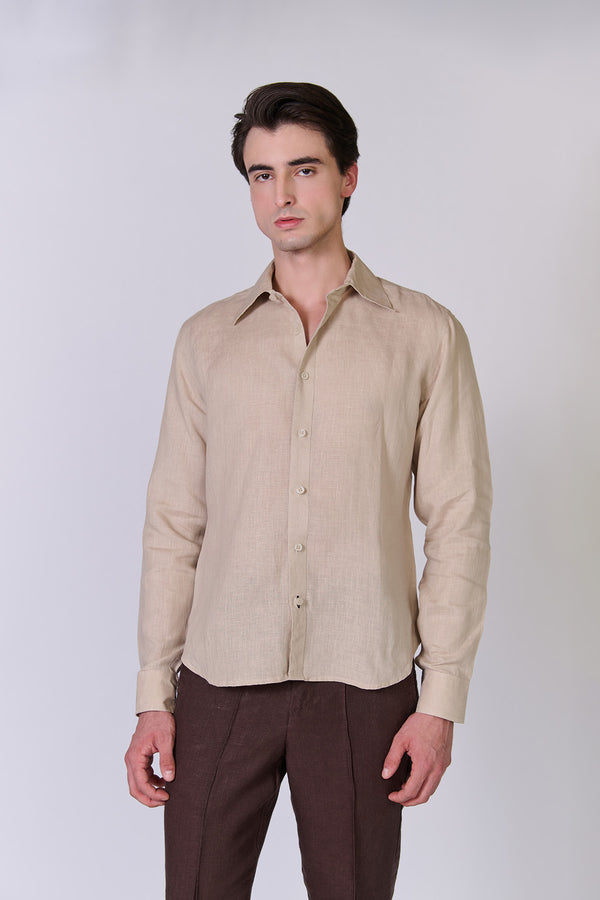
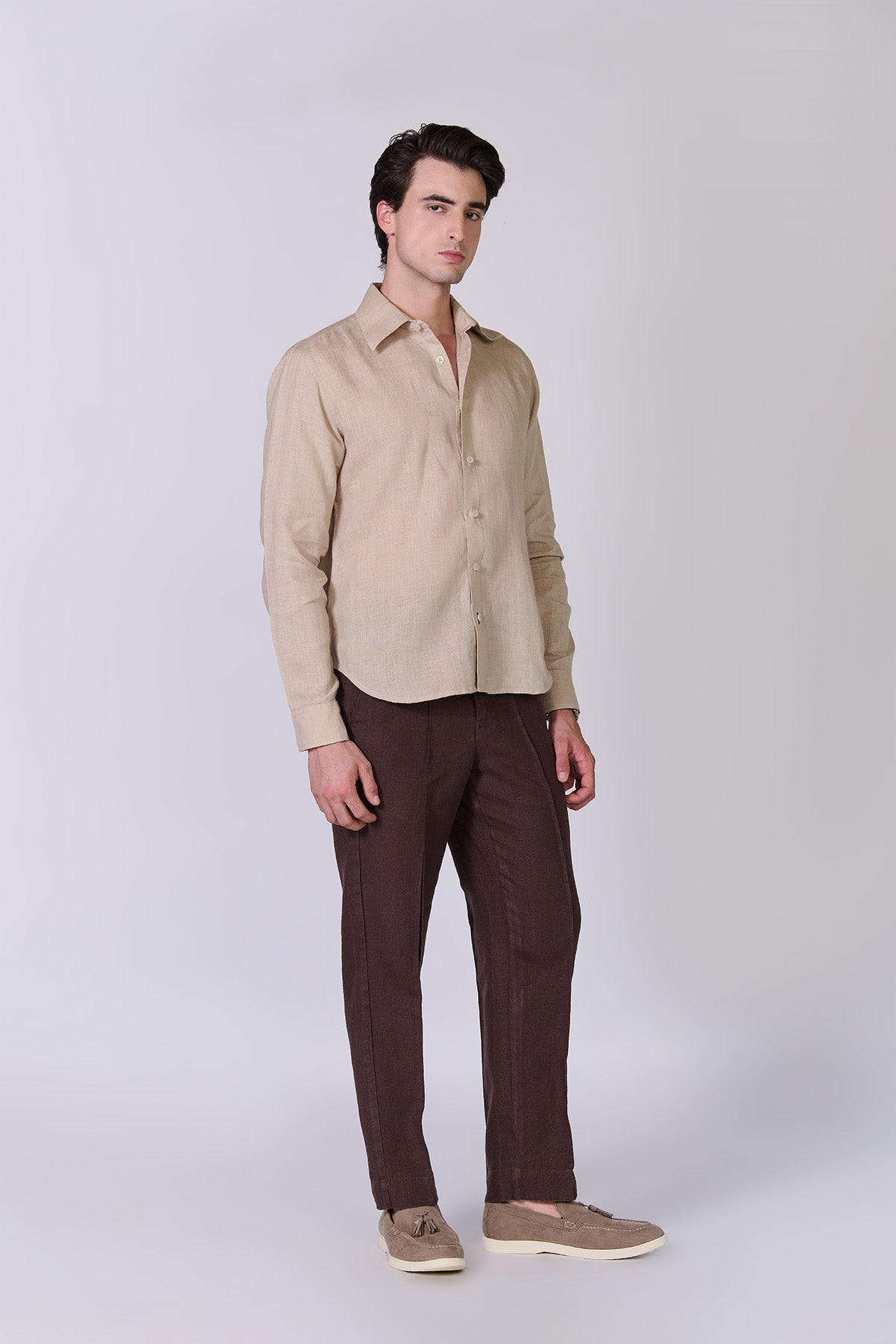
Riviera Linen Shirt, Warm Khaki
Belgian-grown linen, tailored in India. ₹5,950
Shop the shirt →
Light colour, sharp lines
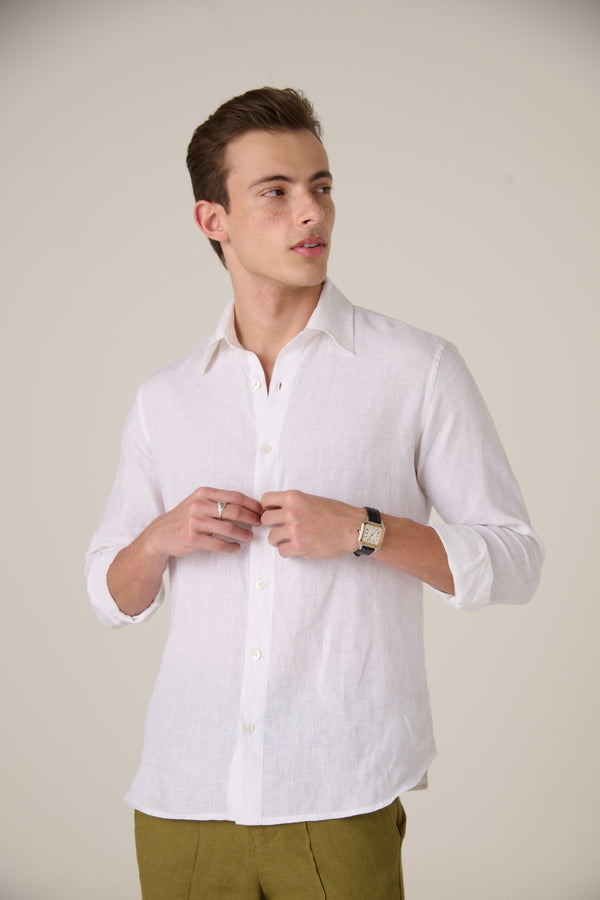
Riviera Linen Shirt, Soft Ivory
Long Belgian flax with a clean drape. ₹5,950
Shop the shirt →Shop the edit


FAQ
What setting should I use to iron linen?
The linen setting — the hottest on most irons — with steam, on fabric that is still slightly damp. Use a pressing cloth on dark colours.
Should I iron linen wet or dry?
Damp. Dry linen resists the iron and takes a stiff, shiny finish. If the shirt has dried, mist it and wait ten minutes first.
Can I iron linen without steam?
Yes, if the fabric is damp and you use firm, continuous strokes. A damp pressing cloth over dry linen also works in a pinch.
How do I get wrinkles out of linen without an iron?
Hang it in the bathroom during a hot shower and smooth the panels by hand, or hang it damp on a broad hanger and let the creases relax as it dries.
One Last Thing
Damp fabric, a hot iron and a broad hanger are the whole trick — no steamer required. Ten minutes buys a shirt that looks considered all day. To see why fabric leads everything we make, read about the materials of Monture, or browse the full linen collection.