































Wash linen cold in a mesh bag, dry it away from direct heat, and never pull a loose thread — those three habits prevent almost every fray you will ever see. Fraying is not a flaw in linen. It is what happens when long flax fibres meet an unfinished edge and get worked loose. Here is why it starts, the habits that stop it, and how to save a frayed edge.
Why linen frays in the first place
Linen is spun from the long bast fibres of the flax plant. The fibres are strong — Belgian-grown flax is prized for fibre length above all — but the yarn carries less twist than cotton, and the cloth is an open, breathable weave. At a cut edge, where no selvedge holds the yarn in place, individual fibres slip out of the weave one by one. That slippage is fraying.
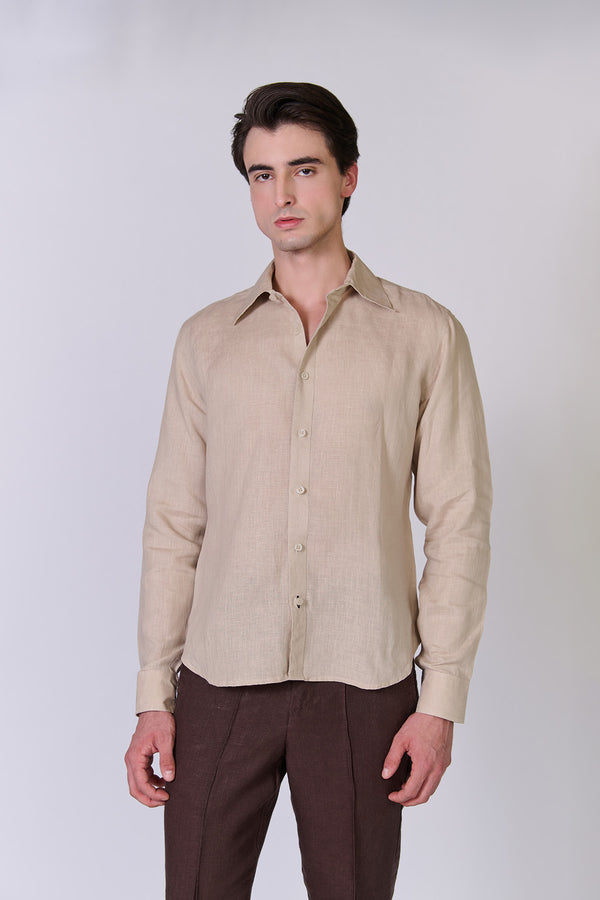
It shows up first in three places: the hem, the placket corners and the cuff edge. A shirt worn and washed weekly will show a faint fuzz there long before the fabric itself loses any strength. Linen shirts for men cut with a generous, folded hem age visibly better than tightly cut ones for exactly this reason. Fit plays a part too — a garment that pulls at the seams stresses its edges, so check the men's linen shirt size guide before you buy.
Wash habits that stop fraying
Most fraying happens in the machine, not on the body. A linen shirt tumbling against a zip for forty minutes sheds more edge fibre than a full season of wear. The fix costs nothing:
- Wash cold, on a gentle cycle, with similar soft fabrics only.
- Close the buttons and turn the garment inside out so hardware cannot bite the hems.
- Use a mesh laundry bag — the single highest-impact habit of all.
- Choose a mild liquid detergent; powder grains rub yarn loose at stress points.
Skip fabric softener. It coats the flax fibres and speeds up pilling along the folds instead of protecting them.
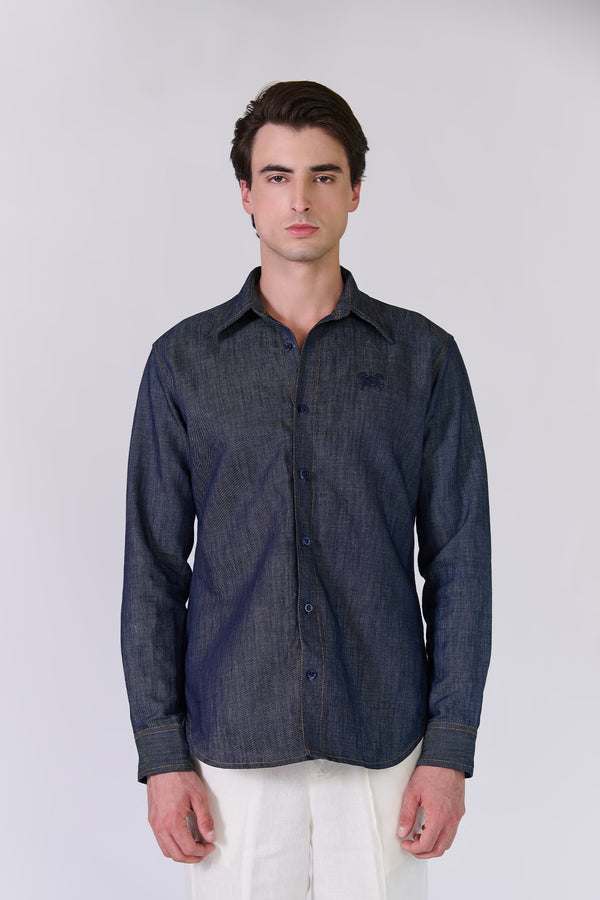
Wash linen with similar colours and weights; a heavy denim load abrades everything lighter in the drum with it.
Quick guide
Four habits, one long-lasting shirt
Wash
Cold, in a mesh bag
Gentle cycle, similar fabrics
Dry
Flat or hanger, in shade
Iron damp, seam direction
Store
Hang, do not fold tight
Folded hems rub themselves
Repair
Whip-stitch, never trim
Scissors shorten the edge
Drying and ironing without stressing the edges
Heat and tension are the second cause. Tumble drying hammers the weave against the drum, shrinks the cloth and drags on every seam. Dry linen flat or on a wide hanger, in shade — strong sun dries the fibres brittle. Iron while the fabric is still slightly damp, following the direction of the seams, and never press across a corner that is already fuzzing. If a dryer is unavoidable, use the lowest heat and stop while the fabric is still damp. For what washing does to the fibre itself, read does linen shrink after washing.
Storage and everyday wear
Edges also fray off the body. Pins, sharp jewellery, seatbelt webbing and overstuffed suitcases all snag loose fibres. Hang shirts on wide hangers rather than folding them; a fold presses a crease across the hem and lets that edge rub against itself every time the garment moves. Fold trousers along their existing crease with the hem tucked inwards. A garment bag is worth the space it takes in shared luggage.
Saving an edge that has already frayed
Caught early, fraying is a ten-minute repair. Turn the garment inside out, trim nothing, and whip-stitch over the raw edge with a fine needle and matching thread, catching each loose fibre back into the seam. The stitches disappear into the weave. What you must not do is cut the fuzz off with scissors — every trim shortens the edge and invites the next fray to start further in. A badly frayed hem is a tailor's job; a bias-tape binding costs a few hundred rupees and outlasts the original finish.

Fray-resistant weave
Como Herringbone Linen Shorts, Warm Khaki
Interlocked herringbone weave in 100% Belgian linen. ₹5,450
Shop the shorts →What Monture builds in: weave and finishing
Fray resistance starts at the loom. Our linen is woven in a dense plain weave from Belgian-grown flax, and every hem is finished with a stitched fold rather than a raw cut, so the edge is held by two layers of cloth. A dense weave holds yarn ends captive; an open weave lets them slide. The Como herringbone linen shorts go one step further: the herringbone weave interlocks the yarn diagonally, the most fray-resistant construction in our range. More on our fabrics lives on the materials of Monture.
What to check before you buy
Turn a garment inside out and look at the hem. A folded, stitched hem resists fraying for years; a raw overlocked edge starts shedding within a season. Hold the fabric up to light; a dense weave will outlast a loose, airy one at the edges. Our full linen collection is finished with folded hems throughout. If you are choosing a blend instead, care differs slightly — read how to care for linen-denim blend clothing before deciding.
Shop the edit


FAQ
Does linen fray more than cotton?
Slightly. Flax fibres are stiffer and carry less twist, so cut edges shed sooner. A folded, stitched hem largely cancels the difference.
Should I cut off the fuzzy threads on a linen shirt?
No. Trimming shortens the edge fibres and fraying restarts further in. Whip-stitch the loose fibres back instead.
Is a mesh laundry bag really necessary?
For machine washing, yes. It is the single most effective way to stop a linen garment from rubbing against zips and hardware.
Can a tailor fix a badly frayed hem?
Yes. Most tailors bind a raw edge with bias tape for a modest charge, and the repair outlasts the original finish.